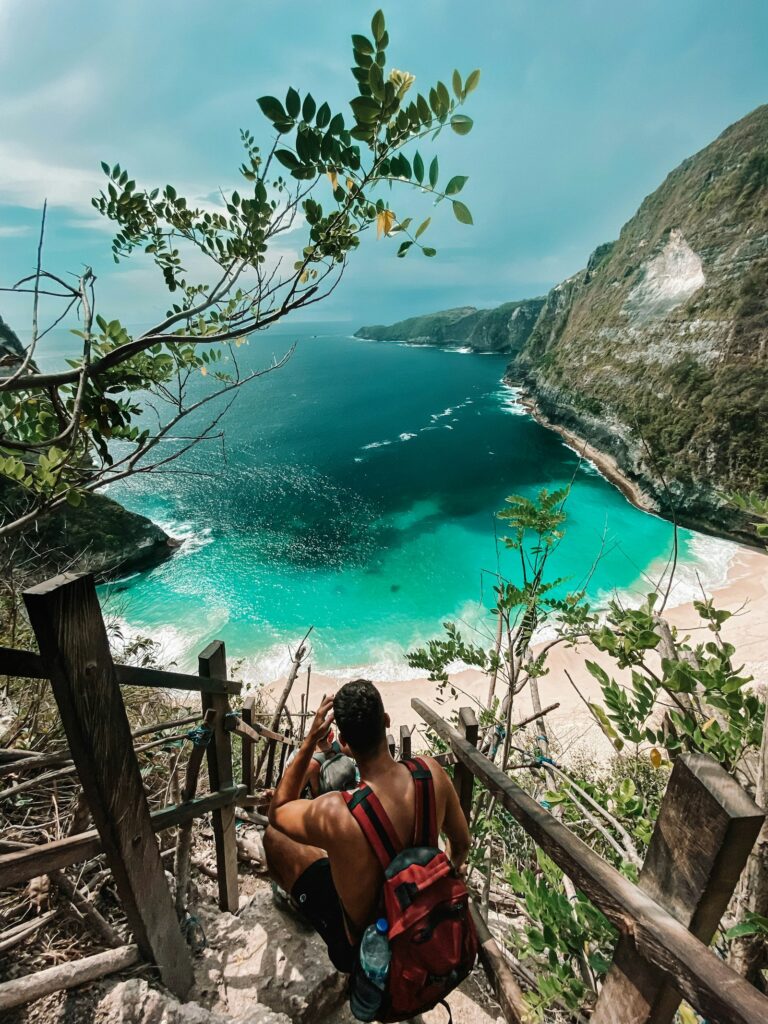
Bali Highlight
A four-day taste of Bali’s icons — temples, rice terraces and a volcano panorama — with two full days of shared, seat-in-coach touring and free time…
From $242 per person
View itinerary
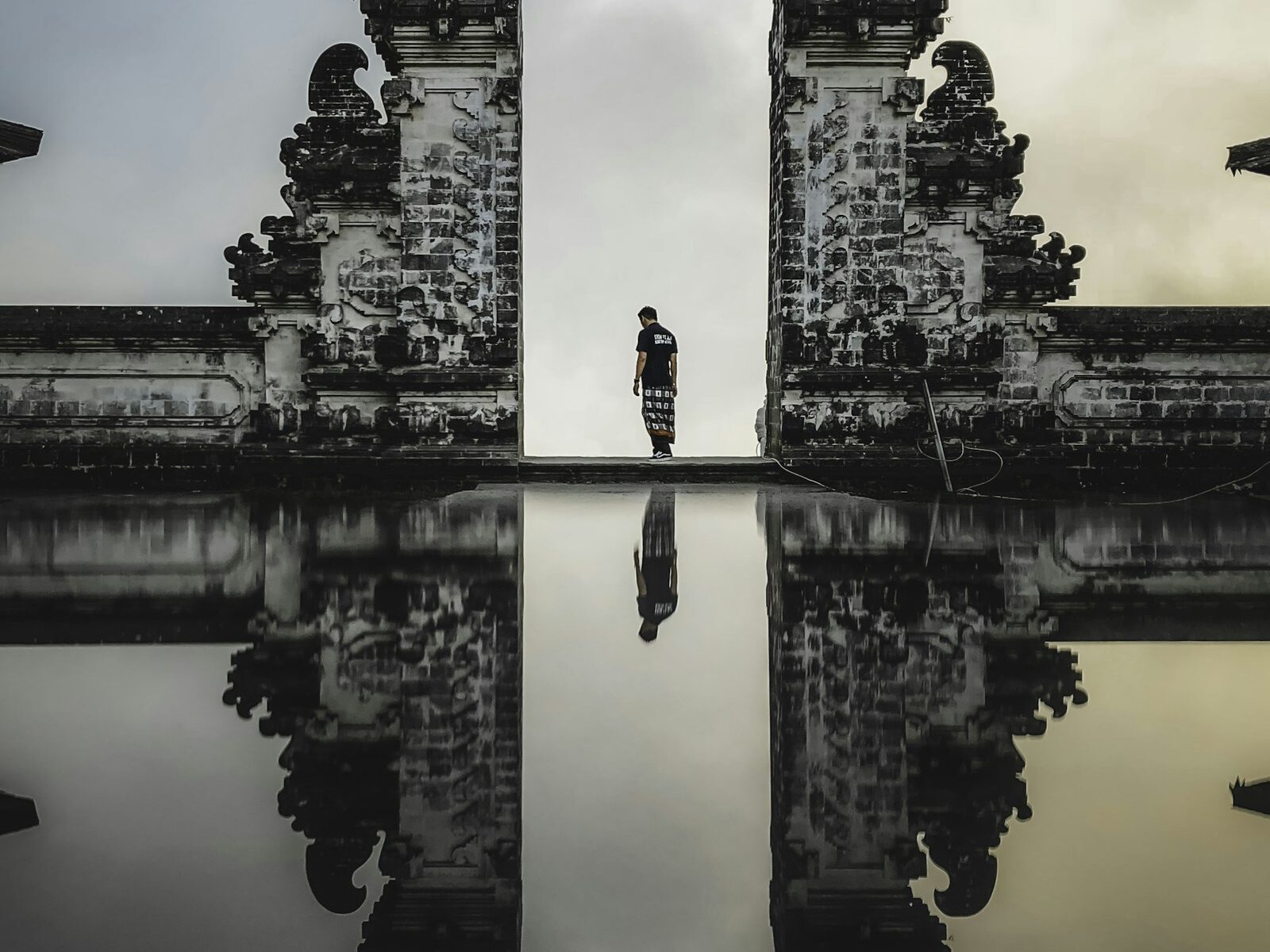
Bali is the Hindu island inside a Muslim-majority country. Here is what that means in practice.
Most guides tell Muslim travellers that Bali is easy because Indonesia is Muslim-majority. That is the wrong way round. Bali is the one Hindu province in the world’s largest Muslim-majority country — roughly one in ten Balinese is Muslim — and it is the only place in Indonesia where pork is a signature local food rather than an absent one.
None of that makes Bali difficult. It makes it a place to plan rather than improvise. Here is what actually matters.
Bali’s Muslim population is not evenly spread, and knowing the pattern tells you where provision will be easy and where it will be thin.
Denpasar has the largest Muslim population by number, and the regencies of Jembrana in the west and Buleleng in the north have proportionally large communities. Badung — which covers Kuta, Seminyak, Jimbaran and Nusa Dua, where most visitors stay — sits around one in ten.
Gianyar, which contains Ubud, is near the bottom at roughly one in fifty. That is the single most useful number in this guide: Ubud is not Kuta, and travellers who assume the same provision are the ones who get caught out.
The communities are also old, not a product of tourism. Gelgel in Klungkung is traditionally dated to the fourteenth century and holds what is generally described as Bali’s oldest mosque. Pegayaman in Buleleng was founded by soldiers granted to a Balinese king, and its residents still carry Balinese birth-order names alongside Muslim ones — a Wayan Muhammad, a Made Jalaluddin. The Balinese call them Nyama Selam, Muslim brethren.
Indonesia’s statistics agency counted several hundred mosques and prayer halls across Bali, so a musholla is a normal building amenity here, not a rarity.
The one worth going out of your way for is Masjid Agung Ibnu Batutah in Nusa Dua. It sits inside Puja Mandala, a purpose-built complex holding five houses of worship side by side — mosque, Catholic church, Buddhist vihara, Protestant church and Hindu temple — built in the 1990s as a deliberate statement about coexistence. If you are staying in the Nusa Dua resort strip, it is close by.
There are several mosques across the Kuta, Legian and Tuban corridor, and Ngurah Rai airport provides prayer rooms in its terminals. Ask for the musholla or ruang sholat — both terms are universally understood. We have deliberately not printed gate numbers or floor locations; terminal layouts change, and a wrong one costs you your connection.
Being straight about the gradient: prayer space is easy to find in Denpasar, Kuta, Legian, Tuban, Jimbaran and Nusa Dua. It is thinner in Ubud, Canggu and Uluwatu, and thinnest on Nusa Penida outside one village. Ask your hotel to point you to the nearest musholla on arrival rather than assuming.
Everywhere else in Indonesia, pork is largely absent by default. In Bali it is a celebrated local speciality, and this is the one thing to internalise before you order.
Babi guling is spit-roast suckling pig and Bali’s signature dish. Urutan is a Balinese pork sausage. Lawar is a coconut, vegetable and spice mix that in its red form contains fresh pig blood — and the thing that catches people out is that lawar is frequently served as a side alongside plain rice, so it can arrive on the plate without being ordered.
Be careful with nasi campur. Mixed rice is harmless across most of Indonesia, but a Balinese nasi campur commonly includes pork or lawar. Ask what is on the plate rather than assuming the name means what it means in Jakarta.
Two words are worth memorising: babi and celeng. Both mean pig, and both appear on menus.
Alcohol is not a grey area either. Bali’s provincial government has formally legalised and promoted its local arak, tuak and brem as protected regional products. Assume it is served, and assume it can appear in sauces and desserts in Balinese-cuisine restaurants.
Indonesia changed how halal certification works, and much of what is written online is out of date.
Certificates used to be issued by MUI, whose green circular logo travellers learned to look for. Under the Halal Product Assurance law, the certificate is now issued by BPJPH, a body under the Ministry of Religious Affairs, while MUI retains the religious role of determining halal status. A new national halal label replaced the MUI logo in 2022, and older packaging was allowed to circulate for years afterwards — so you may still see either mark, and both indicate certification.
Certification is being made mandatory in phases: medium and large food businesses first, with micro and small businesses — which is what most warungs are — following later. That phasing is still working through, so be realistic: formal certification remains the exception rather than the rule in Bali’s mainstream restaurant and hotel sector, and a small family warung is very unlikely to hold a certificate whatever the timetable says.
One widely-shared tip deserves an honest caveat. Padang restaurants — Minangkabau food from West Sumatra — are run by a Muslim community and conventionally serve no pork and no alcohol, which makes them a reliable fallback all over Indonesia. That is a convention, not a certification. It is a good working rule, not a guarantee.
Both appear in most Bali itineraries, including ours, and both deserve a straight answer.
Ubud sits in the regency with almost the lowest Muslim share on the island. There are halal restaurants and there is a mosque, but the choice is small and it changes. Plan where you will eat rather than wandering and hoping.
Nusa Penida is a small, rural island with limited infrastructure of every kind. Its Muslim community is centred on Toyapakeh, a village by one of the main harbours, where there is a mosque — the community there dates to the 1920s and 30s, and the village name is Balinese, from toya (water) and pakeh (salty). Outside Toyapakeh, do not count on finding halal food or a prayer space. Treat Nusa Penida as a day where meals are arranged in advance, not improvised.
This is the most important planning fact on this page, and the one most Muslim travellers have never heard of.
Nyepi is the Balinese Day of Silence, the Saka New Year. For twenty-four hours the entire island observes four restrictions: no fire or light, no work, no travel outdoors, and no entertainment. It applies to everyone, tourists included. Nobody may be on the streets or beaches. You stay inside your hotel, where you can move about freely but with reduced light and noise. Shops close. ATMs are switched off. Foreign visitors who break the rules can be deported.
And uniquely in the world, Ngurah Rai International Airport shuts completely for twenty-four hours — from six in the morning until six the following morning. Hundreds of flights simply do not operate.
Nyepi follows the Balinese Saka calendar, falling on the day after the dark moon of the ninth month, so it moves each year and generally lands in March. The Indonesian government confirms the exact date in an annual holiday decree, which is why we have not printed a future date here — check it, or ask us, before you book March travel.
Two things worth knowing beyond the warning. The days before Nyepi are among the best in the Balinese year to be there: Melasti, a purification procession to the sea, and on the eve, the ogoh-ogoh — enormous demon effigies paraded through the streets and then burned. Only Nyepi itself is a shutdown.
And a specific note for Muslim travellers: in some years Ramadan or Eid falls close to Nyepi. Since the island stops completely and the airport closes, anyone planning a March trip should check both dates against each other before booking.
Bali’s governor issued a circular in 2025 setting out what is expected of foreign visitors, and it supersedes the 2023 version that much travel writing still quotes. It asks for modest and proper attire at sacred sites, tourist sites and in public; courteous behaviour; respect for temples, sacred statues and ceremonies; licensed guides and accommodation; transactions in rupiah through licensed money changers; and payment of the tourist levy electronically. Single-use plastics are prohibited. Penalties run from refused entry to fines and prosecution.
For temples, a sarong (kamen) and sash (selendang) are standard practice at the entrance, with shoulders and knees covered; most temples lend or rent them. Note this is site-level practice rather than something codified in the circular.
One point that is genuinely reassuring for Muslim visitors: tourists are not permitted into temples’ inner sanctums at all, except to pray in Balinese dress. In practice you are visiting outer courtyards and grounds — which sidesteps most questions about participating in worship. And modest dress of the kind many Muslim travellers already wear satisfies Balinese temple requirements comfortably.
A four-day taste of Bali’s icons — temples, rice terraces and a volcano panorama — with two full days of shared, seat-in-coach touring and free time…
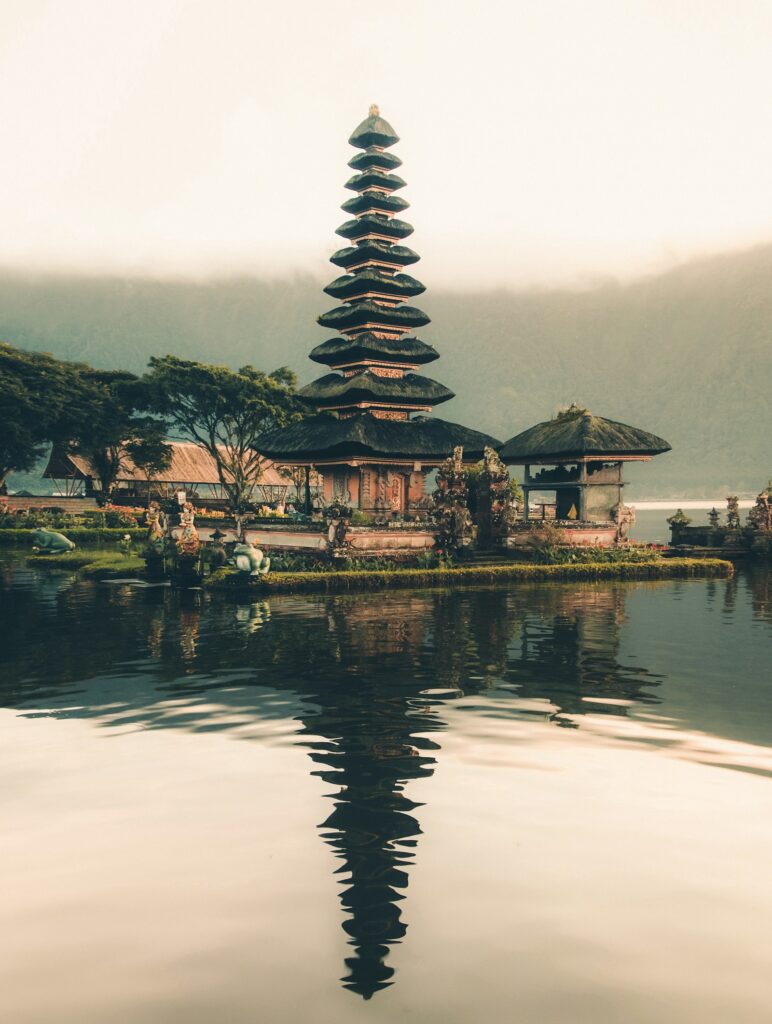
Bali’s most dramatic pairing: a boat trip to Nusa Penida for the Kelingking T-Rex cliff, Broken Beach and Angel’s Billabong, then a full Ubud-and-Kintamani day of…
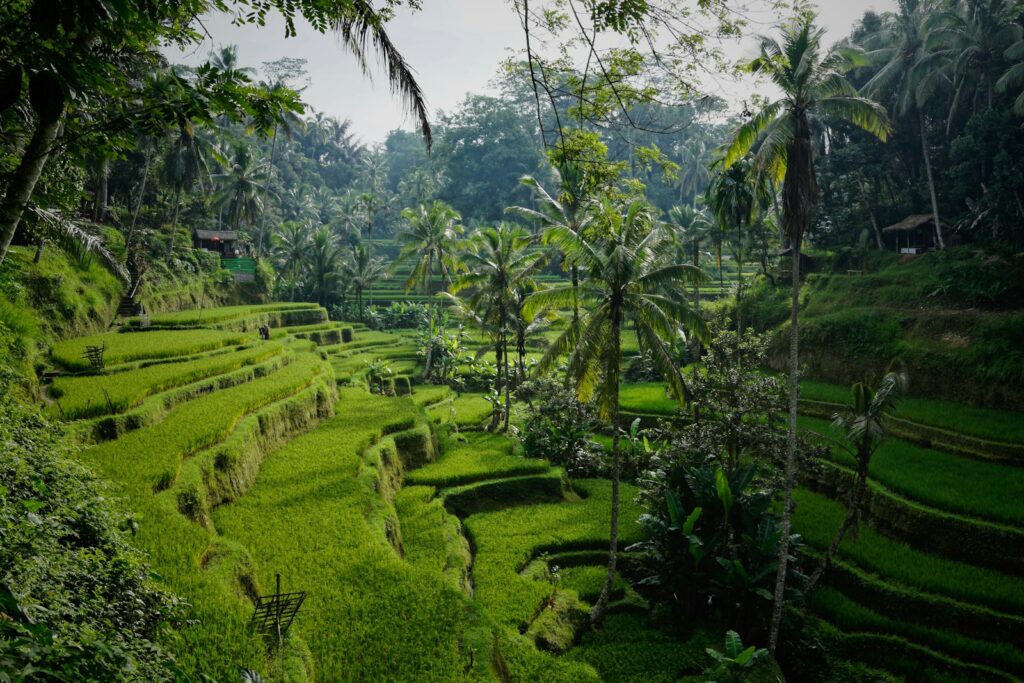
Snorkel the clear waters around Nusa Penida — with Angel’s Billabong and Broken Beach — then spend a day in Ubud’s culture: a hands-on silver-jewellery workshop,…
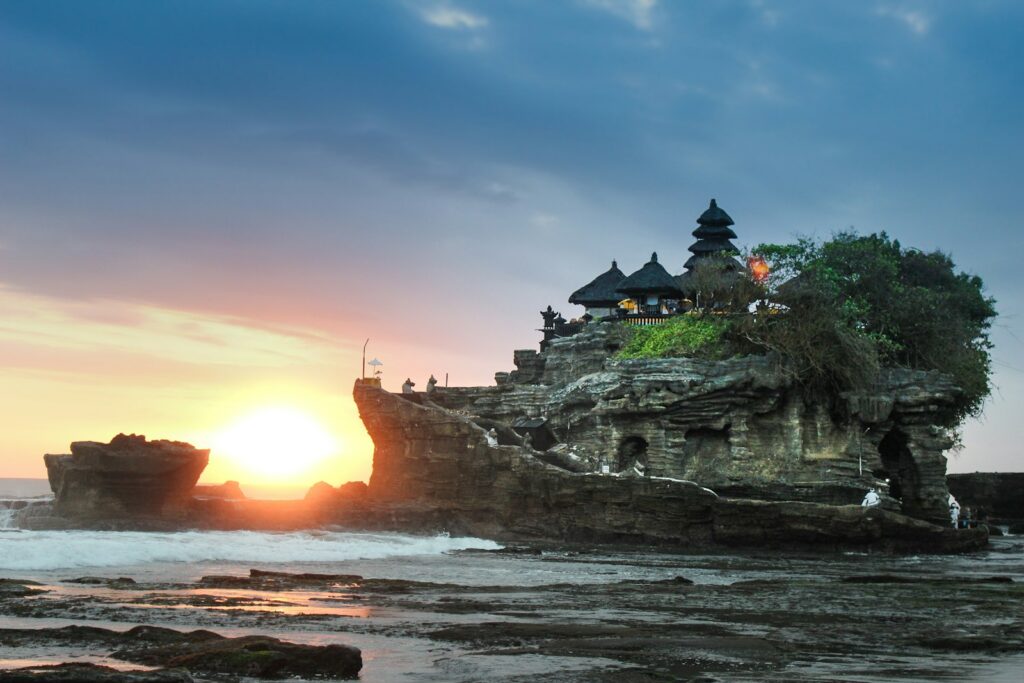
Bali’s greatest hits over five days and three full touring days: the Handara Gate, Ulun Danu and Tanah Lot; Ubud, Kintamani and the Tegalalang rice terraces;…
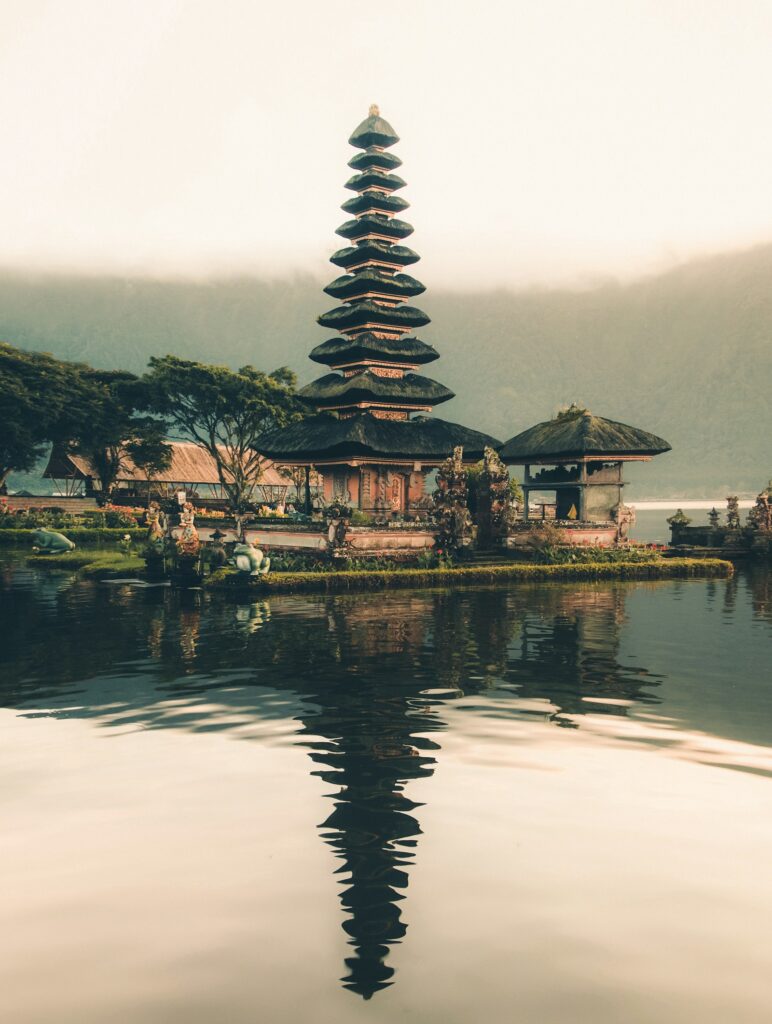
A relaxed, flexible way to enjoy Bali: three nights at the hotel of your choice — from Kuta and Legian to Seminyak, Sanur, Benoa and Nusa…
Not hard, but it needs planning, and Bali is genuinely different from the rest of Indonesia. Pork is a celebrated Balinese speciality rather than an absent ingredient, so dishes like babi guling, urutan and lawar are common — and lawar is often served as a side without being ordered. Halal food is straightforward in Denpasar, Kuta, Legian and Nusa Dua, thinner in Ubud, and limited on Nusa Penida outside the village of Toyapakeh.
Nyepi is the Balinese Day of Silence. For twenty-four hours the whole island stops — no going outdoors, shops shut, and Ngurah Rai airport closes completely for the full day, which is unique worldwide. It falls in March on a date set by the Balinese Saka calendar and confirmed annually by the Indonesian government. If you are travelling in March, check the date before booking. The days before it, with the ogoh-ogoh parades, are spectacular.
In Denpasar, Kuta, Legian, Tuban, Jimbaran and Nusa Dua, yes — musholla are a normal amenity and there are several hundred mosques and prayer halls across Bali. Ngurah Rai airport has prayer rooms in its terminals. It is thinner in Ubud, Canggu and Uluwatu, and limited on Nusa Penida. Ask for the "musholla" or "ruang sholat" — both are universally understood.
Indonesia switched from the old green MUI logo to a new national halal label issued by BPJPH, and older packaging circulated for years afterwards, so you may see either. Both indicate certification. Mandatory certification is still being phased in and small family warungs are unlikely to hold one, so certification is the exception rather than the rule in everyday Bali dining.
Padang restaurants serve Minangkabau food from West Sumatra, are run by a Muslim community, and conventionally serve no pork and no alcohol — which makes them a common and useful fallback throughout Indonesia. We would call that a strong convention rather than a guarantee, and it is not the same thing as certification.
Last verified by our team on 20 August 2026.